



Why Co-Living is Outperforming Traditional Property Investments
The Australian property market demands fresh investment thinking. Traditional strategies face headwinds created by staggering property values, inflated rents, and a growing demographic of tenants seeking flexible housing without the burden of full-property leases. Co-living offers a uniquely well-positioned solution, delivering higher returns, built-in resilience, and alignment with this evolving rental market.
Traditional investments are increasingly out of reach for both aspiring homeowners and investors, with factors fueling this crisis including:
- Record-Breaking Property Prices: The median Australian house price climbed above $928,000 in March Quarter 2024, creating an affordability barrier.
- Spiraling Rents: Lack of rental supply and record-low vacancy rates are driving up rental prices making finding an affordable and suitable rental near impossible.
- Shifting Demographics: Australia is welcoming a wave of young professionals, international students, and location-independent workers who need flexible housing without long-term leases.
Amidst this chaos, the co-living investment model is emerging as an exceptionally compelling solution due to its potential for high returns, built-in resilience, and alignment with changing market demands. Getting Started in Property Investing
What’s inside?
The Co-Living Advantage: Financial Success by Design

- The Income Multiplier Effect: Co-living’s power lies in renting by the room. A standard 4-bedroom house may rent for around $500 per week. However, convert that same property into a co-living space, where each private bedroom with ensuite commands $300+ per week in rent, and your weekly gross income easily jumps to $1200 or more – an 80% boost.
- Minimizing Risk in a Shifting Market: Having multiple income streams from separate tenants inherently decreases your exposure to vacancies. This cushions potential losses unlike a traditional rental where a single departing tenant could mean weeks of lost income.
- Appreciation over Time: Co-living homes prioritize locations valuing proximity to jobs, amenities, and transport networks. This strategic approach increases their desirability, contributing to the potential for capital gains.
Understanding the Numbers: Co-Living vs. Traditional Investment
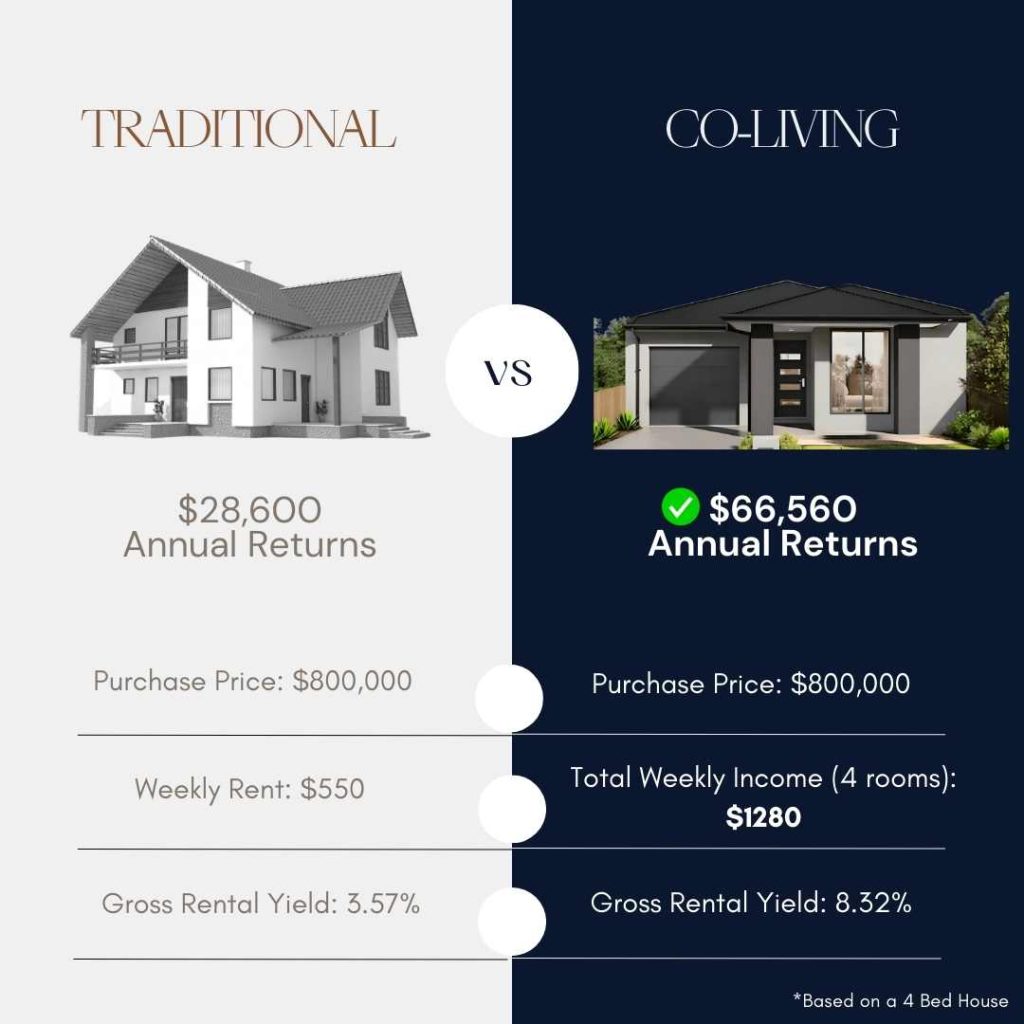
Let’s illustrate the difference with a hypothetical Melbourne example:
- Scenario 1: Traditional Rental
- Purchase Price: $800,000
- Weekly Rent: $550
- Annual Rental Income: $28,600
- Gross Rental Yield: 3.57%
- Scenario 2: Co-Living Investment
- Purchase Price: $800,000 (Let’s assume no major modifications needed)
- Weekly Rent Per Room: $320
- Total Weekly Income (4 rooms): $1280
- Annual Rental Income: $66,560
- Gross Rental Yield: 8.32%
This simplified example demonstrates co-living’s potential to more than double your gross rental yield. Even after factoring in additional property management costs, the net income difference remains significant.
The Stats Speak

Data from the Australian Bureau of Statistics (ABS) underscores the demand for shared housing models:
- 56% Increase by 2041: The number of Australians living in co-living or group housing situations is projected to skyrocket.
- 66,000 New Homes Needed: This translates into an immediate need for an additional 66,000 co-living properties nationally over the next 15 years.
- Investor Opportunity: The market is vastly underserved. Savvy investors entering this space now stand to benefit from this supply-demand imbalance. Co-Living Property: A New Trend In Investment Housing
Who’s Choosing Co-Living and Why?
The appeal of co-living transcends any single demographic:
- Young Professionals: Affordability, community, and location are key draws for early-career individuals and those relocating to new cities.
- Digital Nomads: Co-living offers flexible leases and a built-in social aspect, ideal for location-independent workers.
- Students: Purpose-built rooms near universities eliminate the need to compete for traditional whole-house rentals.
- Lifestyle Seekers: Some choose coliving for its hassle-free living, social opportunities, and reduced financial burden.
Success Lies in the Details
To capitalize on this opportunity, it’s vital to strategically approach your investment:
- Professional Expertise: Partner with developers, builders, and property managers specializing in the co-living model to ensure regulatory compliance and effective management.
- Location is Everything: Prime urban locations with access to transport, facilities, and job hubs will consistently attract the highest-quality tenants.
- Market Awareness: Understanding the specific needs of your target demographic – from students to young professionals – will guide your property location and amenities choices.

Live smart, invest smarter. This exceptional opportunity in Davis Vineyard, Diggers Rest, offers a full turnkey co-living house and land package – ideal for investors seeking a high-yield property with built-in tenant demand.
Final Words
As housing needs evolve, so must investment strategies. This offers a solution for both tenants seeking affordable, flexible living and for investors seeking to maximize returns in a changing property landscape. With data-driven growth projections and tangible financial benefits, now is the time for forward-thinking investors to seize the potential of the co-living revolution.
Contact Mark today to get started!
Disclaimer: This article provides general information only. Before making any investment decisions, consult with qualified financial and property professionals for tailored advice,